24 March 2026
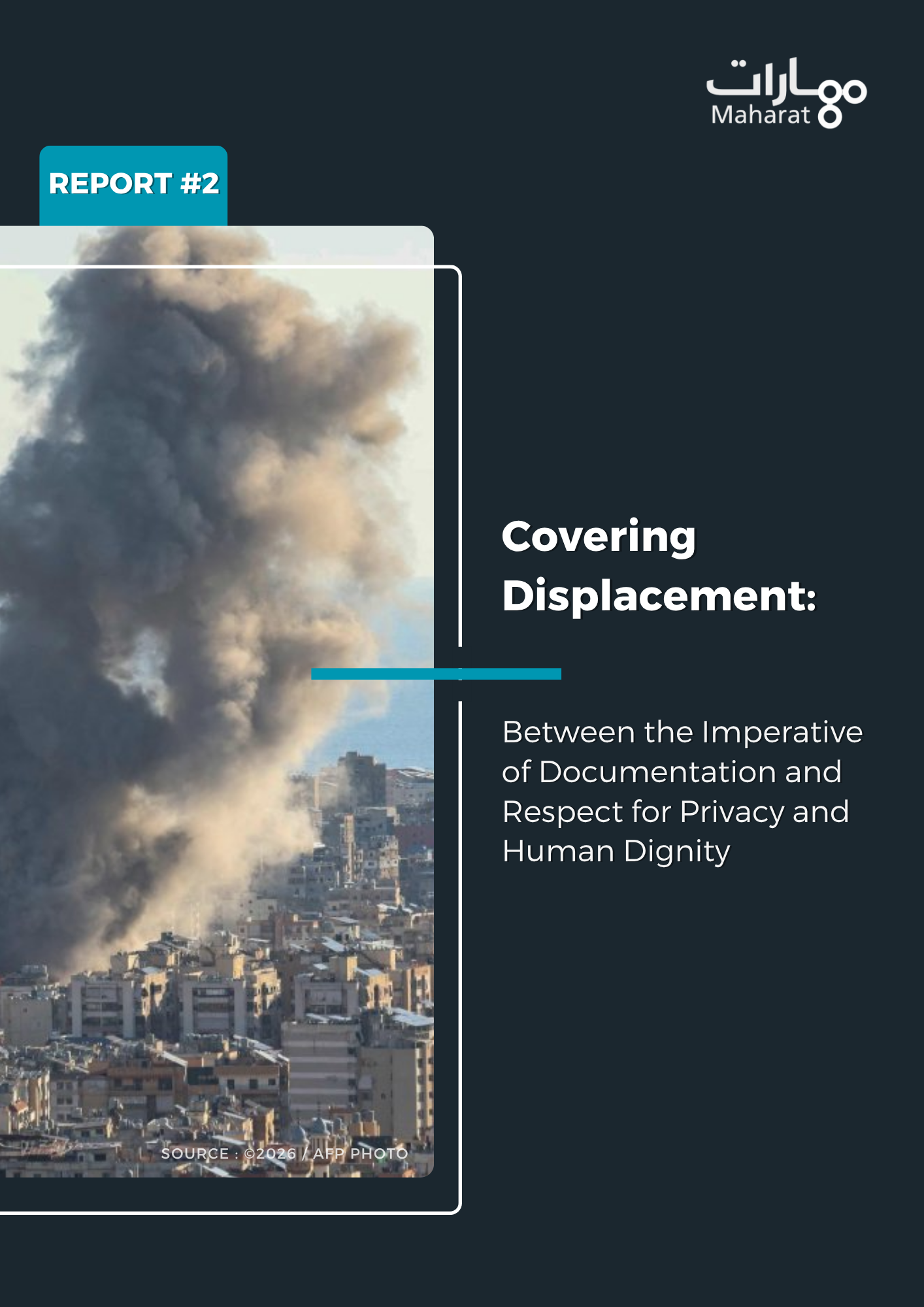
Covering Displacement: Between the Imperative of Documentation and Respect for Privacy and Human Dignity
The report addresses the ethical and professional challenges faced by journalists covering the displacement crisis in Lebanon, particularly with the increasing reliance on images to convey suffering. It highlights the ongoing tension between the need for journalistic documentation and the duty to respect the privacy and dignity of displaced persons, as journalists are often confronted with a difficult choice between capturing a compelling image and obtaining consent while avoiding exploitation of people’s humanitarian circumstances.
The report also draws attention to the psychological impact on journalists themselves, as well as the complexities of working with displaced persons who may refuse to appear or fear the consequences of publication, in addition to the influence of media outlets’ political orientations on the nature of coverage.
At the same time, the report notes the absence of clear policies within many media organizations for guiding sensitive coverage of displacement issues, which increases the risk of professional mistakes, such as violating privacy, politicizing suffering, or focusing on sensationalism. Experts emphasize the need to adhere to fundamental principles, foremost among them the protection of human dignity, obtaining prior consent, and providing balanced narratives that avoid stereotypes.
The report concludes with a set of recommendations aimed at promoting responsible media coverage that places human rights values at the heart of journalism and ensures that the suffering of displaced persons is conveyed objectively and respectfully.
To read the full report: