09 July 2026
Maharat Foundation Contributes to Global Debate on Fact-Checking in Times of War at GlobalFact 2026
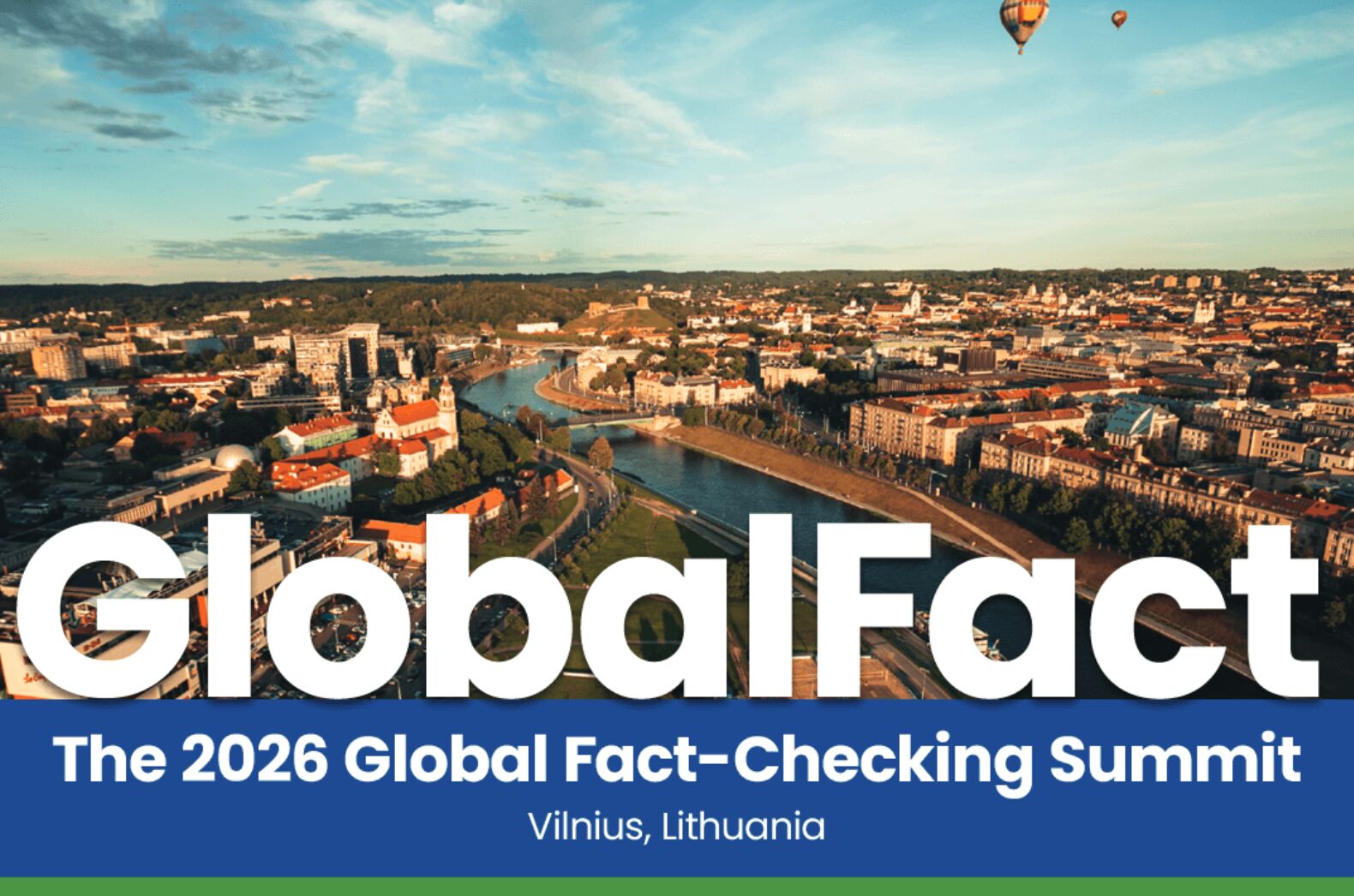
Maharat Foundation participated in GlobalFact 2026, the world's leading annual summit for fact-checkers, organized by the International Fact-Checking Network (IFCN) in Vilnius, Lithuania, from 17 to 19 June 2026, the conference brought together more than 500 journalists, fact-checkers and information integrity experts from over 80 countries to discuss the future of fact-checking, artificial intelligence, information warfare, media sustainability, and public trust.
Representing Maharat Foundation, Layal Bahnam (Program Manager) moderated and spoke in the session "Fact-checking the Battlefield (War and Military Conflict)," a panel that brought together perspectives from Lebanon, Ukraine, Iran, and Pakistan to examine the challenges of verifying information during armed conflicts and political crises.
The session explored how journalists and fact-checkers operate when information is incomplete, access to primary sources is restricted, and competing actors deliberately seek to shape public opinion. Through comparative experiences, panelists discussed the tensions between objectivity and neutrality, the growing impact of generative AI on information manipulation, the role of state and non-state propaganda, and the increasing difficulty of distinguishing verified facts from narratives designed to influence public perception.

Speaking from the Lebanese perspective, Maharat highlighted how fact-checking in Lebanon extends beyond debunking false claims. In a country marked by overlapping crises, weak public institutions, political polarization, and unresolved historical divisions, misinformation often emerges through selective framing, emotionally charged narratives, and information vacuums created by delayed or insufficient official communication. The intervention emphasized that responsible fact-checking requires distinguishing between verified facts, interpretations, and narratives rooted in fear or historical trauma, while remaining transparent about what is known, unknown, and impossible to verify.
The discussion also addressed the challenges posed by artificial intelligence during conflicts. Participants shared experiences of AI-generated content, synthetic media, coordinated influence campaigns and internet restrictions, illustrating how technological developments are reshaping verification practices worldwide. Maharat stressed that AI has expanded the challenge beyond authenticating content to understanding how manipulated images, videos and narratives are designed to trigger emotions, deepen polarization and reinforce existing societal divisions.
The final part of the session examined propaganda vectors during wartime. Drawing on Maharat Foundation's monitoring work in Lebanon, the intervention demonstrated that propaganda is not limited to anonymous online accounts but is often amplified by media. Rather than focusing exclusively on false information, fact-checking during conflicts must also identify information gaps, monitor the circulation of polarizing narratives, and explain how these narratives resonate within societies affected by protracted conflicts and institutional fragility. And this is what Maharat did in its Trends Watch Alerts.
The session opened with a minute of silence in memory of journalists and fact-checkers killed while carrying out their work in conflict zones. Particular tribute was paid to Alaa Salman, a member of Sawab fact-checking team and the IFCN community, who was killed in an Israeli strike on her family's home in southern Lebanon. IFCN Director Angie Drobnic Holan also dedicated a moment of solidarity to Alaa during the conference, reaffirming the global fact-checking community's commitment to protecting journalists and combating impunity. The IFCN published a statement mourning Alaa Salman and recognizing her contribution to fact-checking in Lebanon.